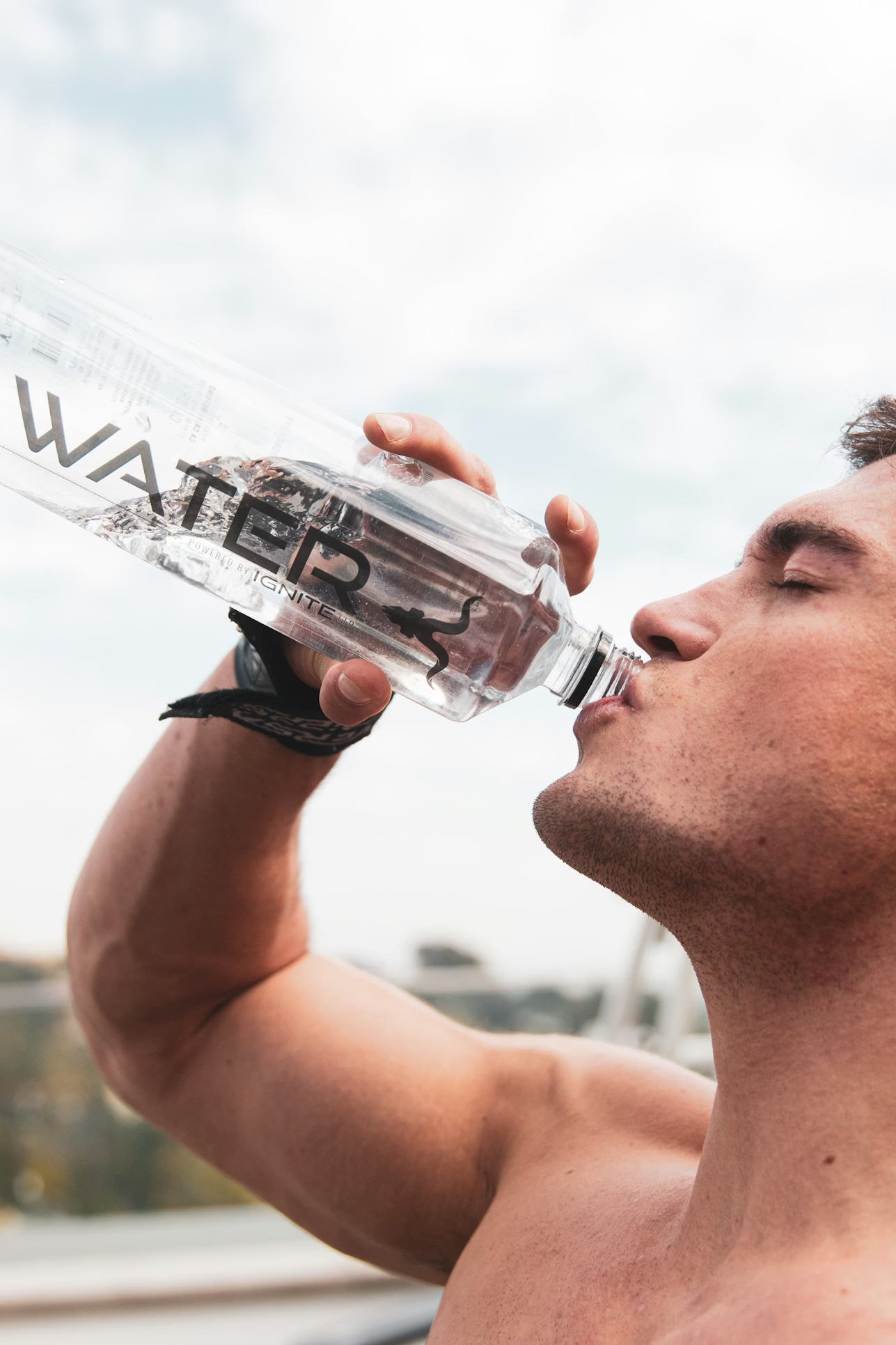
Endurance athlete drinking water after a long race, demonstrating safe post-event rehydration to reduce the risk of exercise-associated hyponatraemia.

Rehydration After Endurance Events

Reducing the Risk of Exercise-Associated Hyponatraemia (EAH) – Adult

Understanding Your Condition

You have completed a prolonged endurance event.

After long periods of exercise, your body releases hormones that cause you to retain water. If you drink more fluid than your body needs, your blood sodium level can become diluted. This is called exercise-associated hyponatraemia (EAH).

EAH can develop during the event or several hours after finishing, especially once fluid in the stomach is absorbed into the bloodstream.

Most athletes recover without problems. However, severe hyponatraemia can become dangerous if not recognised early.

You have been assessed by our medical team and have been deemed to be stable. However, symptoms of EAH can develop over the next 6–24 hours.

The goal now is controlled rehydration, not rapid replacement of all fluid losses.

It is common after endurance exercise to:

  • Feel tired or fatigued
  • Have muscle soreness
  • Pass small amounts of concentrated urine
  • Feel mildly thirsty

These alone do not mean you are dangerously dehydrated.

You should gradually feel more comfortable over the next 12–24 hours.

Mild headache or nausea can occur with normal post-event fatigue.
However, worsening symptoms, persistent vomiting, or confusion are not normal.

The most important rule: Drink to thirst.

  • Sip fluids slowly if thirsty
  • Eat normal meals, especially foods containing salt
  • Oral electrolyte solutions are reasonable, but they do not remove the risk
  • If you are not thirsty, you do not need to drink
  • Avoid “catch-up” drinking

Your thirst is the safest guide.

  • Drinking large volumes quickly
  • Drinking because others encourage you to
  • Following a fixed drinking schedule
  • Assuming sports drinks completely prevent EAH
  • Taking anti-inflammatory medicines (for example ibuprofen) unless advised by a doctor

🚨Call 000 or go to the nearest Emergency Department if…

  • Headache becomes severe or worsening
  • You have repeated vomiting
  • You feel increasingly drowsy or difficult to wake
  • You develop confusion or unusual behaviour
  • You feel unsteady or collapse
  • You develop swelling or puffiness of the face or hands
  • You have a seizure

If someone with you notices that you are “not acting normally,” they should seek help immediately.

Tell medical staff you have completed an endurance event and may be at risk of exercise-associated hyponatraemia.

Symptoms of EAH most commonly develop within the first 24 hours.

If mild symptoms develop (such as nausea or headache) but you remain alert and stable:

  • Stop drinking fluids
  • Rest
  • Seek medical review within 12–24 hours if symptoms do not improve

Once you:

  • Begin passing urine normally
  • Feel naturally thirsty
  • Have no concerning symptoms

You can gradually resume normal drinking patterns.

  • See your GP, or visit an Emergency Department within 24–48 hours if symptoms persist or you are unsure.
  • Seek earlier review if symptoms worsen at any time.

For health advice in Australia call Healthdirect 1800 022 222.

Alternatively, contact or attend your local GP or Emergency Department.

  • Bennett BL, Hew-Butler T, Rosner MH, Myers T, Lipman GS. Wilderness Medical Society Clinical Practice Guidelines for the Management of Exercise-Associated Hyponatremia: 2019 Update. Wilderness Environ Med. 2020;31(1):50-62. PMID: 32044213. https://pubmed.ncbi.nlm.nih.gov/32044213/
  • Hew-Butler T, Rosner MH, Fowkes-Godek S, Dugas JP, Hoffman MD, Lewis DP, et al. Statement of the Third International Exercise-Associated Hyponatremia Consensus Development Conference, Carlsbad, California, 2015. Clin J Sport Med. 2015;25(4):303-320. PMID: 26102445. https://pubmed.ncbi.nlm.nih.gov/26102445/
  • Sawka MN, Burke LM, Eichner ER, Maughan RJ, Montain SJ, Stachenfeld NS. American College of Sports Medicine (ACSM) position stand: Exercise and fluid replacement. Med Sci Sports Exerc. 2007;39(2):377-390. PMID: 17277604. https://pubmed.ncbi.nlm.nih.gov/17277604/
  • Hoffman MD, Stuempfle KJ, Rogers IR, Hew-Butler T. Oral Hypertonic Saline Is Effective in Reversing Acute Mild-to-Moderate Symptomatic Exercise-Associated Hyponatremia. Clin J Sport Med. 2020;30(1):e1-e4. PMID: 31855907. https://pubmed.ncbi.nlm.nih.gov/31855907/

Based on current Australian sports medicine and endurance event safety guidance regarding post-event rehydration and exercise-associated hyponatraemia.

Version 2.0
Review date: February 2026
Next scheduled review: February 2027

NB: This information has been prepared with reference to the most up to date Australian standards and guidance in relevant sports medicine fields. It is prepared in good faith, however is only intended for use as explicitly directed by a DeployED health practitioner. It does not replace medical advice, nor does it purport to be perfect. If you have any doubts about the advice here, please consult your own doctor. If you have not been sent here by us, then this is not for you and DeployED accepts no responsibility for any outcomes which come to pass from your use of this information.

Follow Dr Stuart McLay:

Emergency Physician

Dr Stuart McLay is passionate about the delivery of exceptional care, everywhere. He is the founder of DeployED, a Fellow of the Australasian College of Emergency Medicine (FACEM - an Emergency Physician), a Core trainee of the College for Intensive Care Medicine, and a Mass Gathering Medicine / Expedition Medicine enthusiast. He's also a husband to 1, and father to 3, and a great annoyance to many.